A Holy Land trip is unlike any other: in a few days you go from praying at the Holy Sepulchre to sailing the Sea of Galilee and floating in the Dead Sea. This guide covers the essentials for planning it well.
What to see in the Holy Land
These are the places a first pilgrimage should not miss. We visit them with Spanish-speaking guides.

Jerusalem
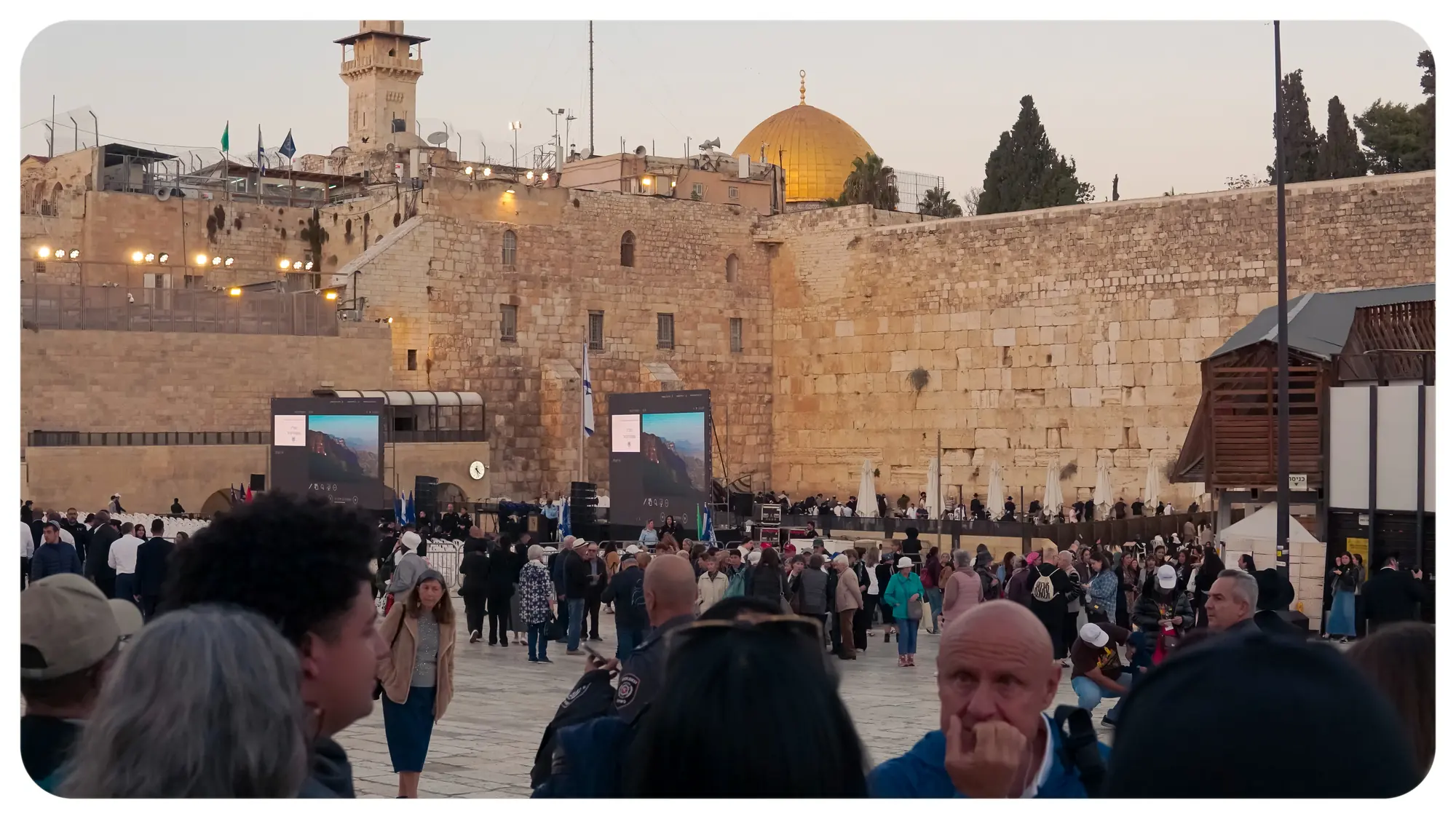
Within one square kilometer, the Old City holds the Western Wall, the Church of the Holy Sepulchre and the Via Dolorosa. The Mount of Olives looks over the whole city, with Gethsemane and the Church of All Nations just below.
Plan at least two full days: one for the Old City and one for the Mount of Olives, Mount Zion and the new city.

Bethlehem and Herodium
In Bethlehem, in the West Bank, the Church of the Nativity holds the grotto that tradition marks as Jesus’s birthplace, with the Shepherds’ Field just outside town. Nearby rises Herodium, the fortress-palace built by Herod the Great.
Bethlehem is about 6 miles from Jerusalem across a checkpoint; always carry your passport.

The Sea of Galilee
Much of Jesus’s ministry took place here: Capernaum and its synagogue, Tabgha with the Church of the Multiplication, and the Mount of Beatitudes. Many groups take a boat across the lake and renew their baptismal vows at the Jordan River.
Stay in Tiberias, on the lakeshore, to see Galilee without rushing.

Nazareth and Cana
Nazareth, where Jesus grew up, is home to the Basilica of the Annunciation, the largest church in the Middle East. A few miles away, Cana of Galilee recalls the wedding of the first miracle, and many couples renew their vows there.
Pair it with Haifa and Mount Carmel on the same day.

The Dead Sea, Masada and Jericho
The Dead Sea sits about 1,400 feet below sea level, the lowest point on Earth, and the water is so salty you float without trying. Nearby are Masada, Herod’s fortress above the desert, and Jericho, one of the oldest cities in the world.
Keep the water away from your face and eyes, and wear sandals for the salt rocks.
Haifa and Mount Carmel
Mount Carmel, linked to the prophet Elijah, is home to the Stella Maris monastery. Below it, Haifa steps down to the Mediterranean in terraces, with the Bahá’í Gardens as its best-known view.
Best time to visit the Holy Land
Spring and fall are the most pleasant seasons for walking Jerusalem and Galilee.
- Jan Rainy
- Feb Rainy
- Mar Good
- Apr Ideal
- May Ideal
- Jun Very hot
- Jul Very hot
- Aug Very hot
- Sep Good
- Oct Ideal
- Nov Good
- Dec Peak
From March to May the Galilee countryside is green and temperatures are mild; Holy Week is the most requested date, so book many months ahead.
June to August is very hot, especially at the Dead Sea and Jericho, where it often tops 104 °F. September to November is ideal again. Winter brings rain and chilly days in Jerusalem but fewer visitors, except at Christmas, when Bethlehem fills up.
Entry requirements for Israel
Neither US nor Mexican citizens need a visa for a tourist visit, but both need an electronic authorization before flying.
US passport (including Puerto Rico)
No visa, with an approved ETA-IL
- Stay up to 90 days as a tourist.
- Apply for the ETA-IL on the official portal before your flight; it costs 25 shekels (about $7).
- Passport valid for at least 6 months.
Mexican passport
No visa, with an approved ETA-IL
- Stay up to 90 days as a tourist.
- The same online ETA-IL before flying.
- Passport valid for at least 6 months.
Since 2025 the ETA-IL is required for visa-exempt travelers: without it the airline will not let you board. Apply only on the Israeli government’s official portal; some sites charge extra fees for the same form.
If your trip crosses overland into Jordan or Egypt, exit and entry fees are paid at the border; on our trips we tell you the amounts when you book.
Official sources: ETA-IL (Israel Population and Immigration Authority) · U.S. State Department travel advisories
Is it safe to travel to the Holy Land?
The situation in the region can change. Before every departure we review the State Department’s travel advisories and our local partners’ reports, and we share them with you plainly before you book.
- Dress respectfully at holy sites. Cover shoulders and knees in churches, at the Western Wall and in mosques.
- Plan around Shabbat. From Friday afternoon to Saturday evening many shops and public transport close in Jerusalem.
- Carry your passport at all times. It is checked at crossings between Israel and the West Bank, for example on the way to Bethlehem or Jericho.
- Comfortable shoes and water. Old City streets are stone with steps, and the desert sun is strong even in spring.
Our Holy Land trips
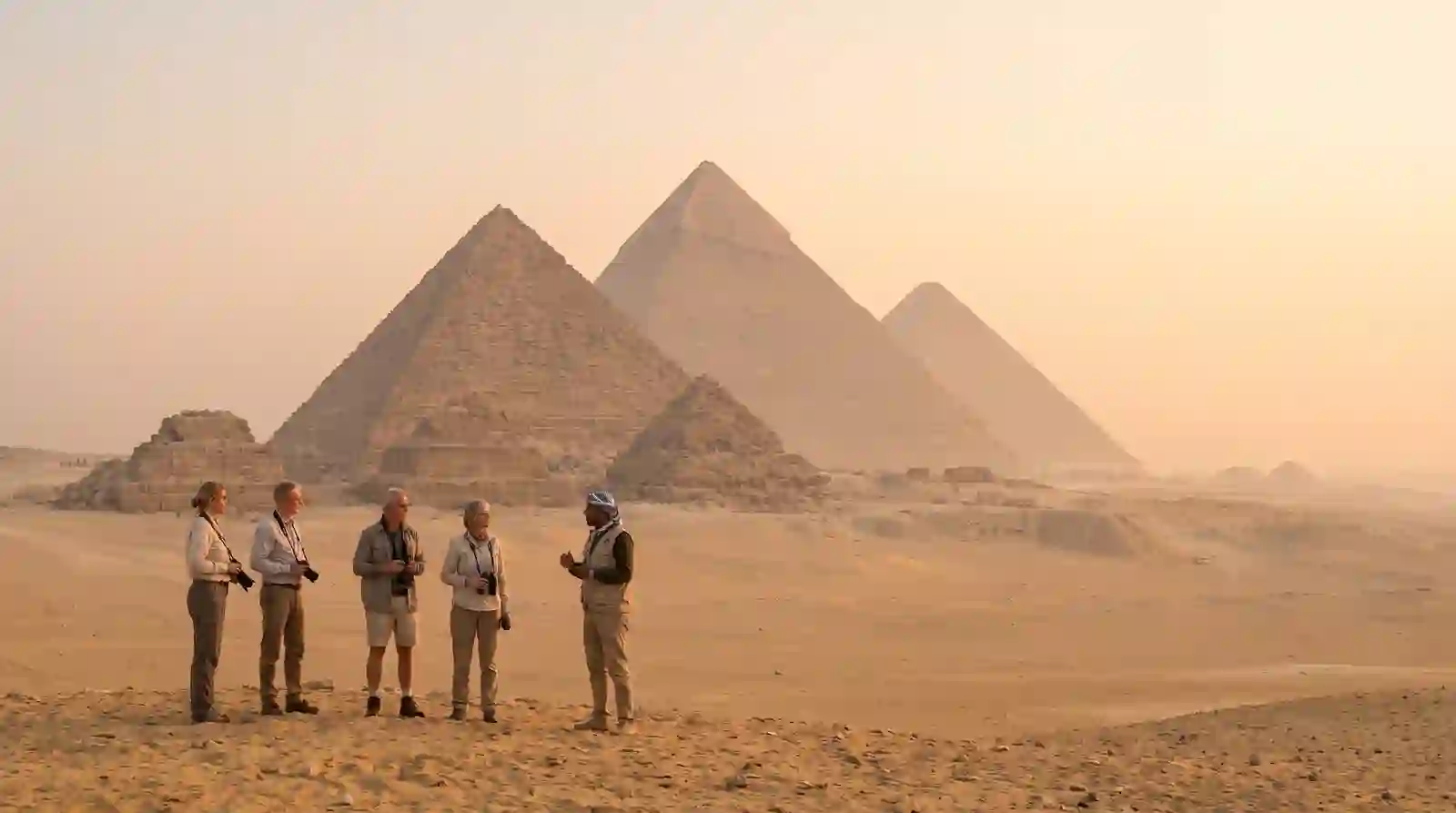
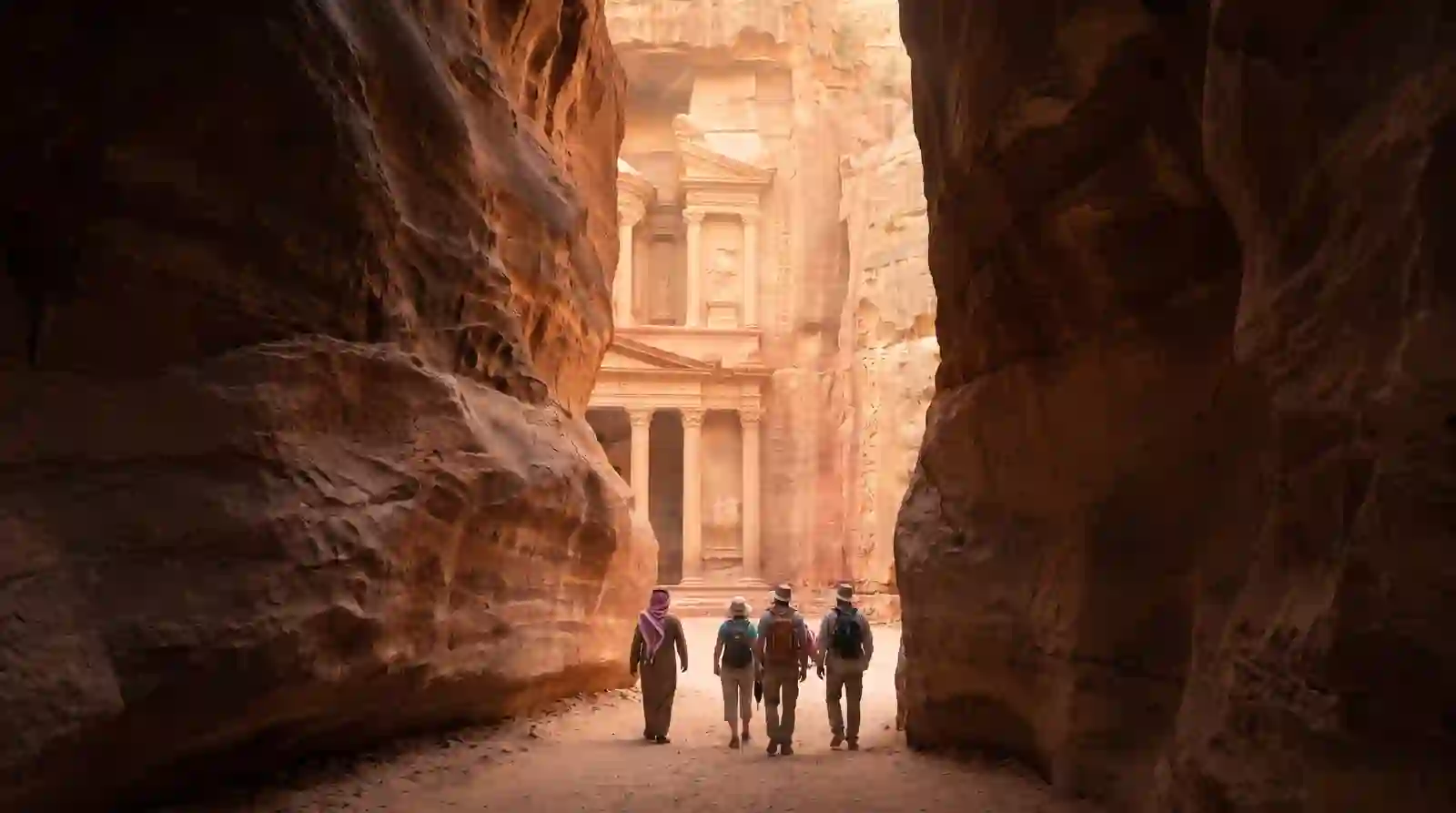
We run group pilgrimages to the Holy Land, often combined with Egypt and Jordan along the route of the Exodus.
Bookings for the 2026 trip are closed. For reference, it was offered from $5,289 per person in a double room. Ask us about the next departures.
Suggested Holy Land itinerary
This is how our Exodus Journey crosses Israel, from south to north and ending in Jerusalem.
-
Day 1
The Dead Sea and Jericho
A float in the Dead Sea, a visit to Jericho and on to Tiberias.
-
Day 2
The Sea of Galilee
Mount of Beatitudes, Tabgha and Capernaum; a boat ride on the lake.
-
Day 3
Nazareth, Cana and Haifa
Basilica of the Annunciation, vow renewal in Cana, Mount Carmel and the view of Haifa.
-
Day 4
From Galilee to Jerusalem
Baptismal renewal at the Jordan River and the drive up to Jerusalem.
-
Days 5–6
Jerusalem and Bethlehem
Mount of Olives, Gethsemane, the Via Dolorosa, the Holy Sepulchre, the Western Wall and Bethlehem.
Frequently asked questions
Do US citizens need a visa for Israel?
No. With a US passport you can visit Israel for up to 90 days without a visa, but you must have an approved ETA-IL electronic authorization before you fly. You apply on the official portal and it costs 25 shekels.
What do Mexican citizens need to travel to Israel?
Mexican citizens also do not need a visa for tourist stays of up to 90 days, but they need an approved ETA-IL before the flight and a passport valid for at least 6 months.
Is it safe to travel to the Holy Land right now?
It depends on the timing and the area. Before every departure we check the State Department advisories and conditions on the ground with our local partners, and we tell you plainly before you book.
How many days do you need for the Holy Land?
Eight to ten days covers Jerusalem, Bethlehem, Galilee, Nazareth and the Dead Sea at a comfortable pace. Add Egypt and Jordan, as on our Exodus Journey, and plan about two weeks.
When is the best time to visit the Holy Land?
March to May and September to November. Holy Week is in very high demand, and summer heat is intense at the Dead Sea and in the desert.
Can you combine Israel with Jordan and Egypt?
Yes. It is one of the most complete routes: Cairo and Sinai, Petra and Wadi Rum in Jordan, then Galilee and Jerusalem. The group crosses the land borders together.