Athens is the gateway to Greece and deserves more than a layover: two days cover the Acropolis, its museums and the old neighborhoods.
What to see in Athens
The historic center is walkable between the Acropolis, the Agora, Plaka and Syntagma.

The Acropolis
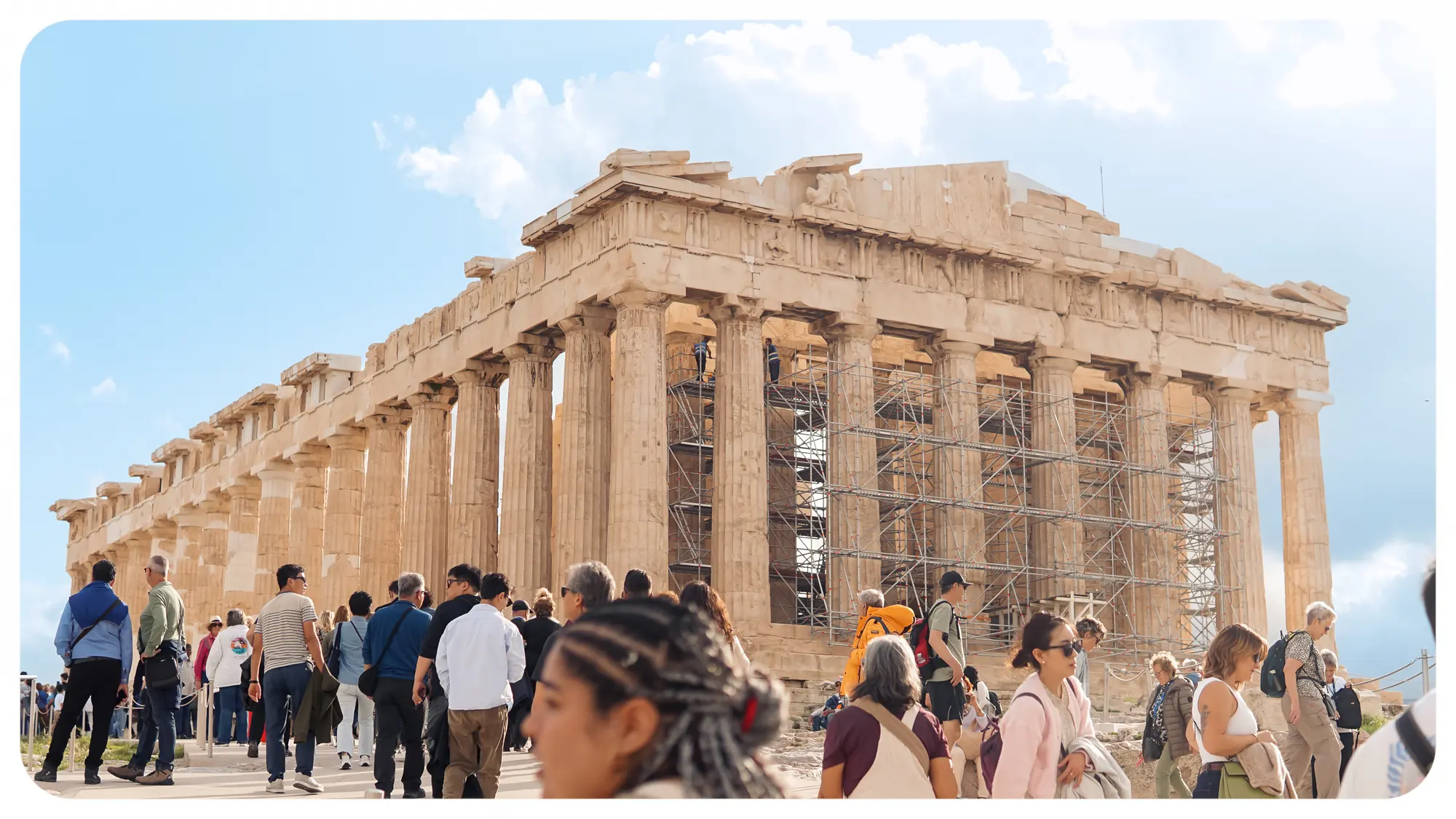
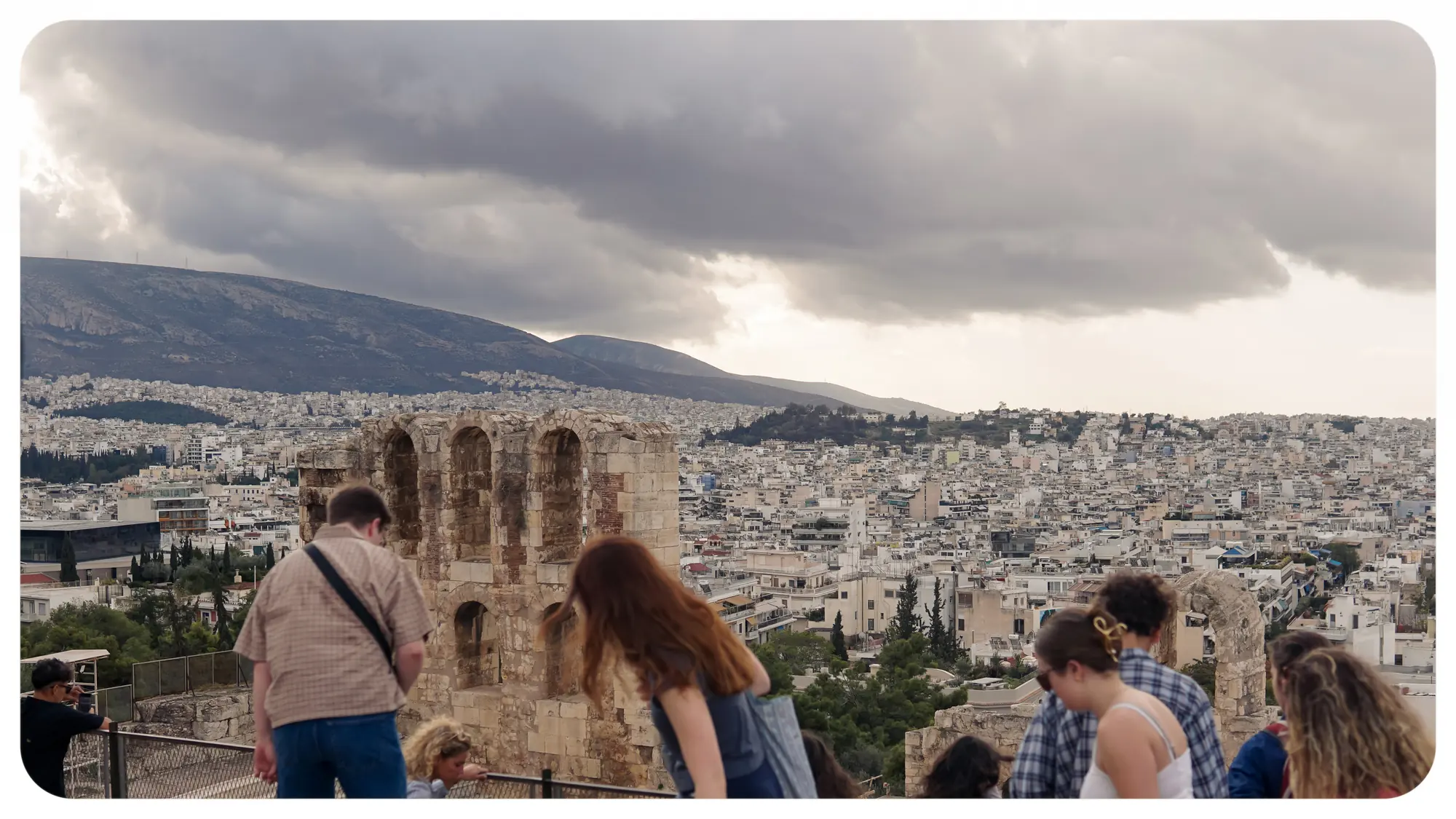
You climb through the Propylaea to the Parthenon, Athena’s 5th-century BC temple, and the Erechtheion with its Porch of the Caryatids. From the top you see all of Athens down to the sea.
Buy a timed ticket on the official site and go at opening time or late in the afternoon.
The Acropolis Museum
At the foot of the hill, with the original Caryatids and the Parthenon Gallery, which recreates the temple at full scale with its sculptures.
The Agora and Plaka
The Ancient Agora, the heart of public life, with the nearly intact Temple of Hephaestus. Next door, Plaka and Anafiotika, lanes of white houses beneath the Acropolis.
Syntagma and the changing of the guard
In front of Parliament, the evzones in traditional uniform change the guard every hour at the Tomb of the Unknown Soldier.
The National Archaeological Museum
The world’s largest collection of ancient Greek art, with the Mask of Agamemnon and the Antikythera Mechanism.
Cape Sounion
An hour down the coast, the Temple of Poseidon on the cliff is the best sunset spot near Athens.
Athens in 2 days
A third day lets you add the Archaeological Museum or a trip to Delphi or the Saronic Islands.
-
Day 1
The Acropolis and its museum
The Acropolis first thing, the Acropolis Museum and dinner in Plaka.
-
Day 2
Agora, Syntagma and Sounion
The Ancient Agora, the changing of the guard at Syntagma and sunset at Cape Sounion.
Best time to visit Athens
Spring and fall are ideal for climbing the Acropolis.
- Jan Cold
- Feb Cold
- Mar Good
- Apr Ideal
- May Ideal
- Jun Good
- Jul Very hot
- Aug Very hot
- Sep Ideal
- Oct Ideal
- Nov Good
- Dec Cold
In July and August temperatures can pass 95 °F and the Acropolis may close during the hottest hours. Winter is mild and good for museums.
Where to stay in Athens
To walk everywhere, stay near the Acropolis.
- Plaka
- The most picturesque area, beneath the Acropolis, with pedestrian streets and restaurants.
- Koukaki and Makrygianni
- By the Acropolis Museum, quieter and residential, with good cafés.
- Monastiraki and Psiri
- Lively, with a flea market, rooftop bars with views and nightlife.
- Syntagma
- The main square, with direct metro to the airport and to Piraeus port.
Tips for visiting Athens
Athens is safe for travelers; watch your belongings on the metro and in Monastiraki.
- Timed tickets: the Acropolis sells by time slot on the official site, and in high season they sell out.
- Shoes with good grip: the Acropolis’s polished marble is slippery.
- For island ferries, Piraeus is about 30 minutes by metro from the center; leave plenty of time.
- Water and a hat in summer: there is no shade on the Acropolis.
Entry requirements for Athens
Greece is part of the Schengen Area.
US and Mexican citizens do not need a visa for tourism of up to 90 days. Since April 2026, fingerprints and a photo are recorded at the border (EES system).
See the full entry requirements in the Greece guide
Official sources: Travel to Europe: EES and ETIAS (European Union) · U.S. State Department travel advisories
Our trips with Athens
Athens opens all our Greece tours and the Athens and Paris trip. Prices per person in a double room, without international flights.
Frequently asked questions
What can you see in Athens in one day?
The Acropolis first thing, the Acropolis Museum, the Ancient Agora and a walk through Plaka to Syntagma.
How much is the Acropolis ticket?
General admission is about €30 and best bought as a timed ticket on the official site. On our tours the guided visit is included.
Where should you stay in Athens?
In Plaka, Koukaki or Monastiraki to walk to the Acropolis; in Syntagma for direct metro to the airport and Piraeus.
How many days do you need in Athens?
Two days for the Acropolis, the museums and the neighborhoods; three if you want a day trip to Delphi or the Saronic Islands.