Tokyo is a city of neighborhoods, each with its own personality. The best way to see it is one area per day, getting around on the punctual, spotless metro.
What to see in Tokyo
These are the essential areas and sights for a first visit.
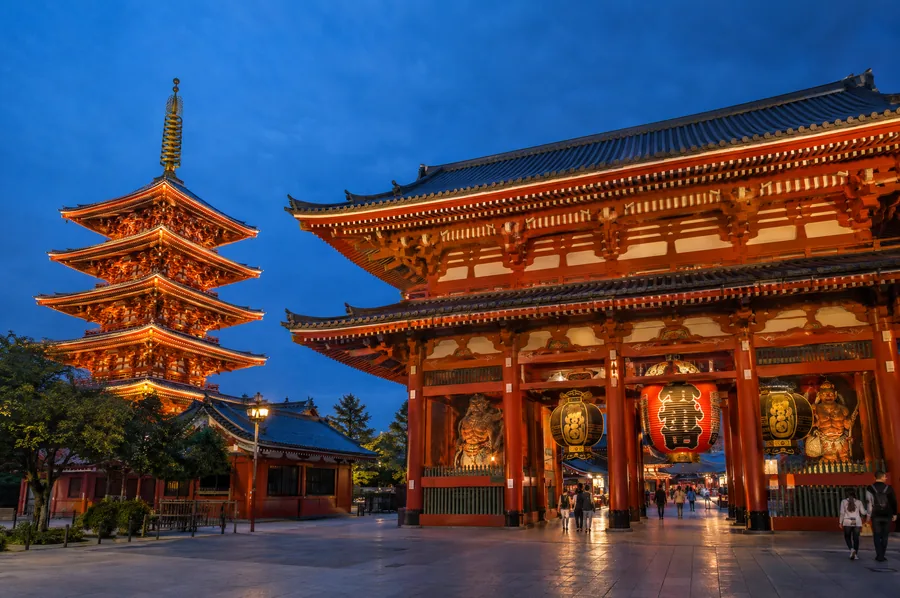
Asakusa and Senso-ji Temple
Tokyo’s oldest temple, founded in the 7th century, is reached through the Kaminarimon gate and Nakamise, a shopping street full of snack and souvenir stalls.
Visit early or at night, when it is lit up and uncrowded.
Shibuya and Harajuku
The Shibuya crossing, the world’s busiest, the Hachiko statue and the Shibuya Sky observation deck. A short walk away, Harajuku’s Takeshita Street and the forest of Meiji Shrine.
Shinjuku
Skyscrapers, the Shinjuku Gyoen national garden, ideal in cherry-blossom season, and at night the alleys of Omoide Yokocho and Golden Gai.
Tsukiji Outer Market and Ginza
Sushi, tamagoyaki and seafood stalls for breakfast, then the shops and department stores of Ginza.
Akihabara and Ueno
Akihabara, the anime and electronics district, and Ueno Park, with museums, temples and the Ameyoko market.
A day trip to Hakone and Mount Fuji
About two hours away, Hakone combines Lake Ashi, the ropeway over the volcanic Owakudani valley and, on clear days, views of Mount Fuji.
Tokyo in 3 days
With a fourth day, take the trip to Hakone and Mount Fuji.
-
Day 1
Asakusa, Ueno and Akihabara
Senso-ji in the morning, Ueno Park and the afternoon in Akihabara.
-
Day 2
Harajuku, Shibuya and Shinjuku
Meiji Shrine, Takeshita Street, the Shibuya crossing at sunset and dinner in Shinjuku.
-
Day 3
Tsukiji, Ginza and the bay
Breakfast at Tsukiji, Ginza, the Imperial Palace gardens and views from Tokyo Skytree.
Best time to visit Tokyo
Spring and fall are the most pleasant seasons.
- Jan Cold
- Feb Cold
- Mar Good
- Apr Peak
- May Ideal
- Jun Rainy
- Jul Very hot
- Aug Very hot
- Sep Good
- Oct Ideal
- Nov Ideal
- Dec Cold
Cherry blossoms usually bloom in Tokyo in late March or early April. Summer is hot and humid, with rain in June and July; winter is cold and dry, with clear skies for seeing Fuji.
Where to stay in Tokyo
The most practical choice is near a station on the Yamanote line, which loops around the center.
- Shinjuku
- The great transport hub, with hotels in every category and nightlife.
- Shibuya
- Modern and lively, well connected to Harajuku and the west of the city.
- Ginza and Tokyo Station
- Elegant and central; ideal if you are taking the bullet train.
- Asakusa
- More traditional and quiet, with lower prices.
Tips for visiting Tokyo
Tokyo is one of the safest cities in the world. The tips are mostly practical.
- Suica or Pasmo card: works on the metro, trains, buses and at convenience stores, including on your phone.
- Avoid rush hour (7:30 to 9:30 a.m.) on the metro if you have luggage.
- People do not eat while walking; locals eat by the stall or on a bench.
- Carry a bag for trash: there are very few public bins.
Entry requirements for Tokyo
Japan’s entry requirements apply to Tokyo.
US and Mexican citizens do not need a visa for short tourist stays. You can complete arrival forms ahead of time on Visit Japan Web.
See the full entry requirements in the Japan guide
Official sources: Visa exemptions (Ministry of Foreign Affairs of Japan) · Visit Japan Web · U.S. State Department travel advisories
Our tours with Tokyo
All our Japan tours start in Tokyo, with Spanish-speaking guides. Prices per person in a double room, without international flights.
Frequently asked questions
How many days do you need in Tokyo?
Three days for the main neighborhoods; four if you want to add the Hakone and Mount Fuji day trip.
Where should you stay in Tokyo?
Shinjuku or Shibuya for connections and atmosphere; Ginza or near Tokyo Station if you are taking the bullet train.
What can you see in Tokyo in one day?
Senso-ji in Asakusa in the morning, Meiji Shrine and Harajuku at midday, and the Shibuya crossing and Shinjuku at night.
Can you see Mount Fuji from Tokyo?
Yes, on clear days, especially in winter, from viewpoints such as Shibuya Sky or Tokyo Skytree. For a close-up, take the Hakone trip.