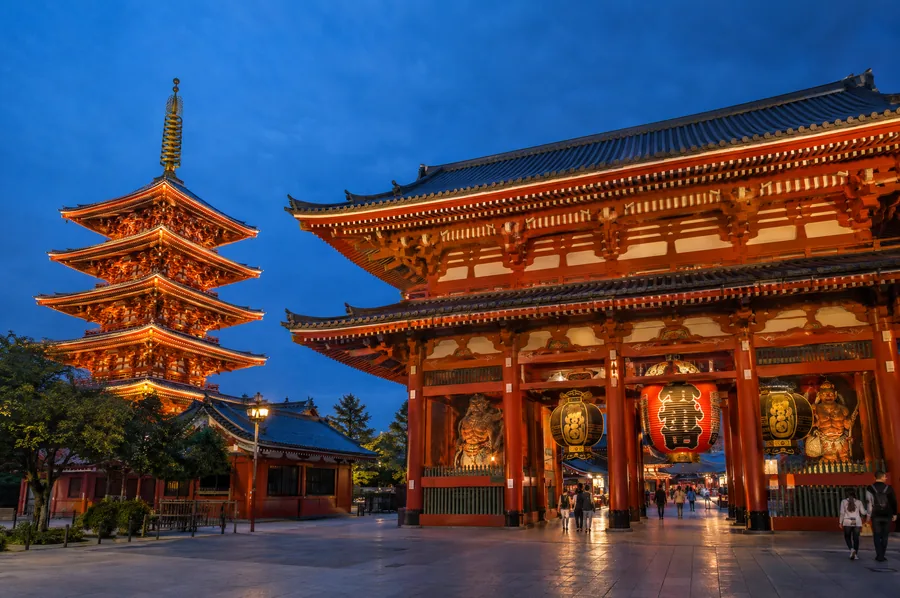
Kyoto was Japan’s imperial capital for more than a thousand years and keeps some 1,600 temples. It is the city for traditional Japan.
What to see in Kyoto
The temples are spread across the city: group your visits by area.
Fushimi Inari
Thousands of red torii gates form tunnels up the slopes of Mount Inari. The full hike to the top takes two to three hours, but the first stretches are already spectacular.
Arrive before 8 a.m.: it fills up by mid-morning.
The Golden Pavilion and Ryoan-ji
Kinkaku-ji, the gold-leaf temple reflected in its pond, and nearby the Ryoan-ji rock zen garden.
Kiyomizu-dera and Higashiyama
The wooden temple with its great terrace over the hillside, and the stone-paved lanes of Sannenzaka and Ninenzaka, with teahouses and traditional shops.
Gion
The geisha district, with wooden houses along Hanamikoji and the Shirakawa canal. At dusk you may glimpse a maiko on her way to an appointment.
Some private lanes in Gion ban entry and photos; respect the signs.
Arashiyama
The bamboo grove, Tenryu-ji temple and its garden, and the Togetsukyo bridge over the river, on the city’s western edge.
Nara
About 45 minutes by train, the great Buddha of Todai-ji, one of the largest wooden buildings in the world, and a park where deer roam free.
Kyoto in 3 days
With only two days, save Nara for another trip.
-
Day 1
Fushimi Inari, Higashiyama and Gion
Fushimi Inari at sunrise, Kiyomizu-dera, Sannenzaka and the evening in Gion.
-
Day 2
North and west
The Golden Pavilion, Ryoan-ji and the afternoon in Arashiyama.
-
Day 3
Nara
Todai-ji and the deer park; back for dinner at Nishiki Market.
Best time to visit Kyoto
Spring cherry blossoms and fall’s red leaves are the best times, and the busiest.
- Jan Cold
- Feb Cold
- Mar Good
- Apr Peak
- May Ideal
- Jun Rainy
- Jul Very hot
- Aug Very hot
- Sep Good
- Oct Ideal
- Nov Peak
- Dec Cold
November is momiji season, with temple gardens in red and gold. Kyoto’s summer is especially hot and humid; winter is cold but quiet.
Where to stay in Kyoto
Choose between ease of getting around and traditional atmosphere.
- Kyoto Station
- The most practical: the bullet train, buses and trains to Nara and the airport at the door.
- Gion and Higashiyama
- Traditional atmosphere, with wooden houses and temples on foot.
- Karasuma and Shijo
- The shopping center, between the station and Gion, with many restaurants.
- A ryokan
- A traditional inn with tatami, Japanese baths and a kaiseki dinner: worth one night.
Tips for visiting Kyoto
Kyoto is very safe. The challenge is the number of visitors at the most famous temples.
- Start early: Fushimi Inari, Kiyomizu-dera and Arashiyama are best before 9 a.m.
- Respect geisha and maiko: do not stop them or photograph them without permission.
- Buses get crowded; combine subway, train and taxi for longer distances.
- At temples, take off your shoes where indicated and wear clean socks.
Entry requirements for Kyoto
Japan’s entry requirements apply to Kyoto.
US and Mexican citizens do not need a visa for short tourist stays.
See the full entry requirements in the Japan guide
Official sources: Visa exemptions (Ministry of Foreign Affairs of Japan) · Visit Japan Web · U.S. State Department travel advisories
Our tours with Kyoto
Our Japan tours spend three nights in Kyoto, arriving by bullet train from Tokyo. Prices per person in a double room, without international flights.
Frequently asked questions
How many days do you need in Kyoto?
Two days for the main temples and Gion; three to add Arashiyama at an easy pace and the Nara day trip.
What can you see in Kyoto in one day?
Fushimi Inari at sunrise, Kiyomizu-dera and Higashiyama, the Golden Pavilion in the afternoon and Gion at dusk.
How do you get from Tokyo to Kyoto?
By bullet train (shinkansen), about two and a quarter hours. On our tours the ride is included.
Where should you stay in Kyoto?
By the station for convenience, or in Gion and Higashiyama for traditional atmosphere.