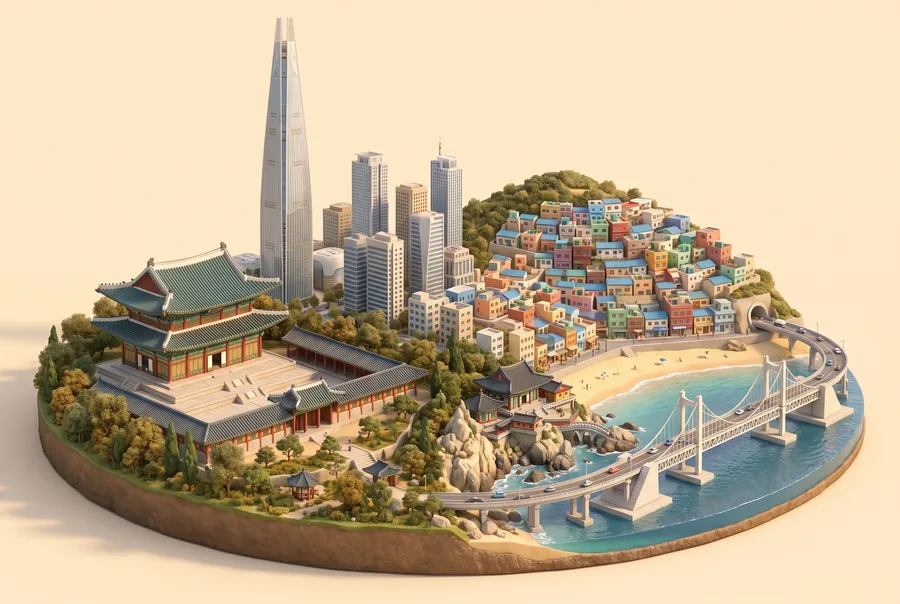
Seoul blends 600-year-old palaces with skyscrapers, all-night markets and K-pop energy. Its metro reaches everywhere and is signposted in English.
What to see in Seoul
The palaces and traditional districts are in the historic center, north of the Han River.
Gyeongbokgung Palace
The largest of the five Joseon-dynasty palaces, with the changing of the guard at the main gate and the National Folk Museum inside the grounds.
Closed on Tuesdays. Wear a hanbok and entry is free.
Changdeokgung and its Secret Garden
The palace most in harmony with its landscape, a World Heritage Site, with a garden visited only on guided tours.
Closed on Mondays; book the Secret Garden ahead.
Bukchon and Insadong
Bukchon keeps hundreds of hanoks, traditional wood-and-tile houses, on sloping lanes between two palaces. Next door, Insadong is the street of teahouses, calligraphy and crafts.
People live in Bukchon: on some streets tourist visits are only allowed during the day.
Myeongdong and N Seoul Tower
The street for shopping and Korean skincare, with street-food stalls at dusk, and the cable car up Namsan for the city lights.
Gwangjang Market
One of Seoul’s oldest markets, famous for mung-bean pancakes (bindaetteok), kimbap and noodles.
Gangnam and the DMZ
Modern Seoul in Gangnam, with the Starfield Library at COEX, and a half or full-day trip to the demilitarized zone on an authorized tour.
Seoul in 3 days
With a fourth day, add the DMZ trip.
-
Day 1
Palaces and Bukchon
Gyeongbokgung and the changing of the guard, Bukchon and Insadong; dinner at Gwangjang Market.
-
Day 2
Changdeokgung and Myeongdong
The Secret Garden in the morning, shopping in Myeongdong and N Seoul Tower at dusk.
-
Day 3
Gangnam and the Han River
The Starfield Library, modern Seoul and a walk through the riverside parks.
Best time to visit Seoul
Spring and fall are the most pleasant seasons.
- Jan Cold
- Feb Cold
- Mar Good
- Apr Ideal
- May Ideal
- Jun Good
- Jul Rainy
- Aug Very hot
- Sep Good
- Oct Ideal
- Nov Ideal
- Dec Cold
Cherry blossoms bloom in early April, and in October the parks turn red and gold. July brings monsoon rains; winter is very cold, below freezing.
Where to stay in Seoul
For a first visit, the historic center is the most practical.
- Myeongdong
- Central, with hotels in every category, shopping and street food.
- Jongno and Insadong
- By the palaces and Bukchon, with boutique hotels and hanok stays.
- Hongdae
- The university district, with live music, cafés and a young crowd.
- Gangnam
- Modern, business Seoul, south of the river.
Tips for visiting Seoul
Seoul is a very safe city with excellent public transport.
- T-money card: for the metro, buses and convenience stores.
- Use Naver Map or KakaoMap: Google Maps does not give full directions in Korea.
- Check closing days: Gyeongbokgung closes on Tuesdays and Changdeokgung on Mondays.
- The DMZ is only visited on authorized tours and with your passport.
Entry requirements for Seoul
South Korea’s entry requirements apply to Seoul.
US and Mexican citizens do not need a visa for tourism and are exempt from the K-ETA until December 31, 2026. For trips in 2027, check the official portal.
See the full entry requirements in the South Korea guide
Official sources: K-ETA (official Korean portal) · Korea e-Arrival Card · U.S. State Department travel advisories
Our tours with Seoul
We visit Seoul on our tours combining Korea with Japan, or with China and Japan. Prices per person in a double room, without international flights.
Frequently asked questions
How many days do you need in Seoul?
Three days for the palaces, neighborhoods and markets; four if you want to add the DMZ trip.
Where should you stay in Seoul?
In Myeongdong or Jongno to have the palaces and shopping close by; in Hongdae for a younger vibe.
What can you see in Seoul in one day?
Gyeongbokgung with the changing of the guard, Bukchon and Insadong, and Myeongdong and N Seoul Tower at night.
Can you visit the DMZ from Seoul?
Yes, on authorized half or full-day tours, with your passport. Our Japan & Korea tour includes it on the way to Busan.